
Drawing on the experiences of two clean energy companies, POPO and Natfort Energy, this post showcases strategies to attract women talent into technical and field-based roles dominated by men.
The Talent Pipeline Problem
In the clean energy sector, many organisations recognise the value of attracting more women into the workforce, yet translating that intention into results can feel challenging in practice. Many companies can point to a gender policy, a diversity statement, or the business case for doing so. Yet technical, field and engineering roles remain predominantly male.
The lack of women in these roles is often a product of how recruitment systems have evolved over time. Recruitment pipelines frequently rely on referral networks that are predominantly male dominated. Women have limited visibility as technical role models. Even where women are well represented overall, they are often concentrated in administrative or support roles rather than positions linked to higher pay and progression.
For clean energy companies, focusing on women recruits is both an equity consideration and a business opportunity. A narrow talent pipeline limits innovation, weakens connection to diverse customer bases and constrains long-term growth. On the other hand, expanding women’s participation can close gender gaps and contribute to business growth.
Turning Commitment into Action
Through the Transforming Energy Access Platform, Value for Women partnered with Carbon Trust to support companies in translating gender intentions into tangible commitments and practical strategies to create business and social value. One of the strategies, featured in our recent report ‘From Commitment to Inclusive Action’, focuses on a practical question many SMEs are asking: “how can we redesign our workforce systems so more women see, access and thrive in technical roles?”
Two companies, POPO in Uganda and Natfort Energy in Zimbabwe, took up this challenge. Their experience shows that attracting women into technical positions is more achievable than many assume. It begins with deliberate, practical shifts in how companies recruit and how they signal that women belong in these roles. Also helpful is building early career pathways that encourage women to stay and grow within the organisation.
POPO: How Changing the Ask Changed the Applicant Pool
POPO is a data-driven distribution company that has been providing innovative, high-quality, and clean off-grid solar and productive use solutions in Uganda since 2019. While women represented 64% of the overall workforce and 65% of management roles, field and technical positions remained predominantly male, with men holding 75% of positions.
Recruitment practices were a key factor. Approximately 90% of staff had been hired through referrals. While effective for speed and trust, referral-based hiring tends to replicate existing networks and women were less likely to hear about field opportunities or be recommended for them. As POPO expanded its sales and field agent workforce, leadership made a deliberate decision to test whether small shifts in how roles were communicated and advertised could widen the applicant pool.
What POPO did differently
With support from Value for Women, POPO’s leadership team participated in inclusive recruitment training and applied the learning immediately in a December 2025 hiring round. They diversified outreach beyond referrals, explicitly encouraged women to apply, offered flexible and virtual interviews, ensured diverse interview panels, and set a target of at least 50% women among 60 new sales agents.
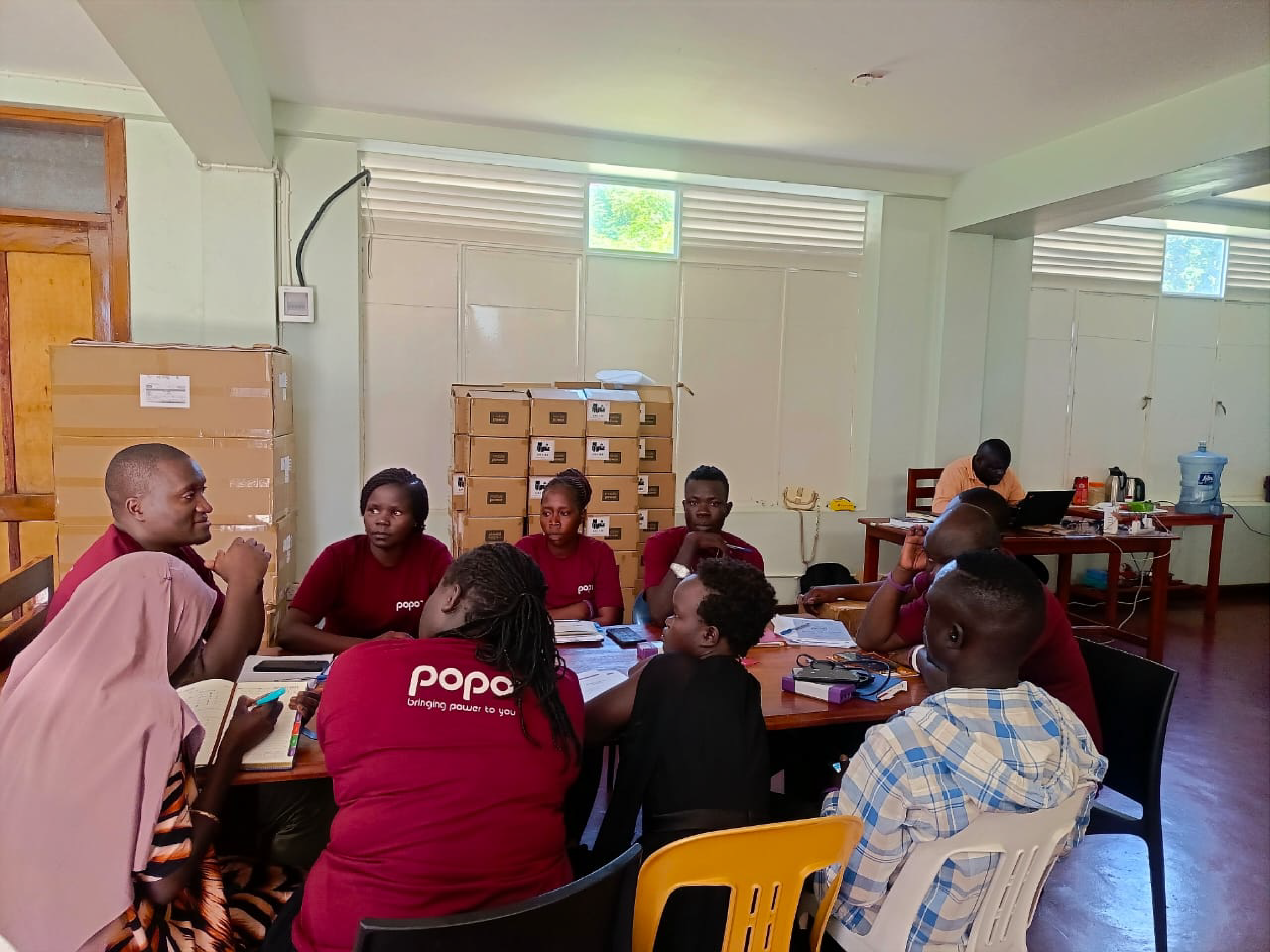
The results were immediate. Of 22 applications received for the sales agent position advertised in early December 2025, 72% were from women. For POPO, this represented an unprecedented level of interest from women candidates.
In addition, 100% of leadership participants in the inclusive recruitment training reported increased confidence in applying gender-inclusive hiring practices.
As one POPO senior leader reflected: “We said women are strongly encouraged to apply, and it worked.”
The key takeaway from POPO’s experience is that expanding women’s participation in technical roles can begin by diversifying outreach, making the invitation to women candidates explicit, and addressing practical barriers in the hiring process like making it easier to interview.
Natfort Energy: Building a Stronger Technical Talent Pipeline
Natfort Energy is a last-mile distributor of clean, affordable, and sustainable energy solutions to marginalised and underserved communities in Zimbabwe.
The challenge begins well before recruitment. In Zimbabwe, only 28% of STEM graduates are women, meaning the pool of women entering technical careers is narrow from the outset. Natfort recognised that relying on the existing pipeline would limit both diversity and long-term growth.
What Natfort did differently
Working with Value for Women, Natfort developed a focused early career pipeline strategy. The company established partnerships with Midlands State University and the Women’s University in Africa, two universities in Zimbabwe, to attract more young women in STEM into internships and technical roles. It also introduced mentoring, learning and development opportunities, and structured performance support to help women entering technical roles succeed and progress.
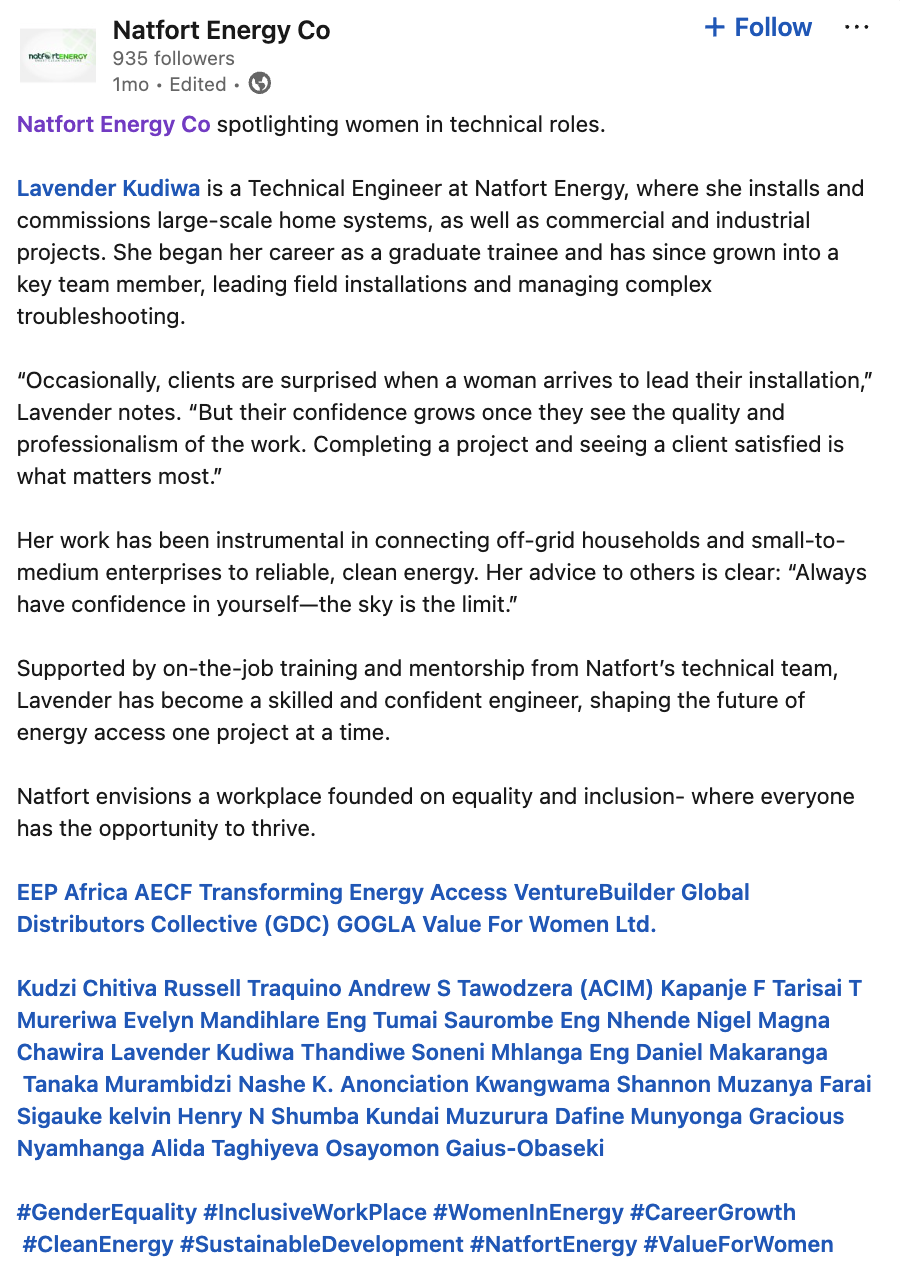
Natfort also adopted a formal target of 100% women interns in technical roles for 2026 and launched a communications campaign highlighting women in technical and field positions, which helped increase visibility and signal that women belong in these roles (see image below).
By establishing clear targets, strategic partnerships and internal support systems, Natfort has moved from intention to structured action.
Over time, these foundations are expected to contribute to a more gender-balanced technical workforce and a stronger talent pipeline aligned with Natfort’s long-term growth.
What This Means for Clean Energy SMEs
These examples illustrate that small, intentional changes can make technical roles more accessible to women. Here are a few practical steps to get started:
Move beyond passive hiring. If recruitment relies heavily on referrals, you may be limiting who accesses opportunities. Diversifying outreach channels, especially to channels you know reach your target women’s market, expands the pool.
Set explicit targets. Clear goals for women applicants, hires or interns signal that inclusion is measurable and accountable.
Make women visible. Showcasing women in technical roles helps shift perceptions and encourages more women jobseekers to apply.
Build early career pathways. Partnerships with universities and structured internships create new entry points into technical roles.
Pair hiring with support. Mentoring and development systems help ensure women stay and progress.
The examples from POPO and Natfort Energy show that an inclusive energy transition is possible, starting with recognising gaps, making deliberate adjustments, and treating inclusion as a strategic priority. The question for every clean energy SME is: what small, practical, deliberate step will you take next to bring more women into your technical teams?
This blog is part of a series featuring our upcoming report ‘Powering Inclusion: Tested Approaches for a Gender-Inclusive Energy Transition’, which shares the findings from GEDSI-lens advisory and capacity-building provided by Value for Women under the Transforming Energy Access Platform (TEA) Platform. The report outlines how organisations can translate GEDSI commitments into concrete high-impact actions that reach new customers, uncover new market opportunities and build inclusive workplaces.
This project was funded with UK aid from the UK government via the Transforming Energy Access platform.
Transforming Energy Access (TEA) is a research and innovation platform supporting the technologies, business models and skills needed to enable an inclusive clean energy transition.
This material has been funded by UK aid from the UK government; however the views expressed do not necessarily reflect the UK government's official policies.

Value for Women is a global advisory services firm with a mission to promote women’s participation and leadership in business, finance and investment around the globe, with a focus on emerging markets.